
How Often Should You Schedule Office Cleaning in Frederick MD
A workplace can look fine at 9 a.m. and feel neglected by 3 p.m. Trash fills up, fingerprints appear on glass, floors collect grit, and breakrooms take the most damage after lunch. The right cleaning schedule keeps those small issues from becoming daily distractions.
For businesses in Frederick and surrounding Frederick County communities, there is no single schedule that fits every workplace. A quiet professional suite may only need weekly service, while a medical or eye care office with steady patient traffic may need cleaning every day. The goal is to match the frequency to how the space is actually used.
This guide will help determine whether daily, weekly, bi-weekly, monthly, or customized service makes the most sense.

Step 1. Start with how many people use the space each day
The number of employees, visitors, vendors, and customers affects cleaning frequency more than square footage alone. A small office with 25 employees may need more attention than a larger suite used by only a few people.
Think about daily use in practical terms:
How many employees work onsite each day?
Do customers, patients, tenants, or guests visit regularly?
Are most workstations shared or assigned?
Does the team eat onsite?
Are restrooms used by staff only or by the public?
A private accounting office with limited foot traffic may stay presentable with weekly service. A busy reception area, staffing agency, real estate office, or customer-facing business may need cleaning several times per week to keep first impressions consistent.
For companies comparing office cleaning Frederick MD options, usage is usually the best place to begin.
Step 2. Look closely at restrooms, breakrooms, and shared spaces
Some areas need cleaning more often because they collect germs, odors, spills, and visible mess quickly. Even if the main work areas look acceptable, restrooms and breakrooms can tell a different story.
High-priority areas often include:
Restrooms
Breakrooms and kitchenettes
Reception areas
Conference rooms
Copy and mail areas
Shared workstations
Entry doors and glass
Floors near entrances
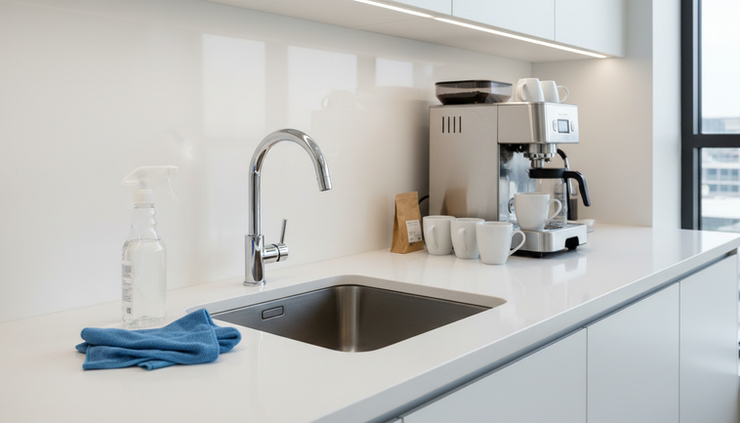
Breakrooms deserve special attention. Coffee spills, crumbs, overflowing trash, full recycling bins, and sticky counters can make the whole workplace feel unclean. Restrooms also set the tone. If odors, empty supplies, or dirty fixtures show up between cleanings, the current schedule may be too light.
Step 3. Match cleaning frequency to your type of business
Different workplaces have different expectations. A schedule that works for a small administrative office may not be enough for a healthcare-related space or a busy corporate location.
Professional offices
Law firms, accounting offices, insurance agencies, consulting firms, and similar workplaces often do well with weekly or several-times-per-week cleaning. The right choice depends on staff size, client visits, and restroom use.
A small professional suite with limited visitors may need vacuuming, trash removal, restroom cleaning, and dusting once per week. A larger firm with clients in and out may need more frequent service to keep reception areas and conference rooms ready.
Medical and eye care offices
Medical offices, dental offices, eye care practices, therapy offices, and other patient-facing spaces usually need more frequent cleaning. These workplaces often have waiting rooms, exam rooms, restrooms, and high-touch surfaces that see steady use throughout the day.
Daily service may make sense, especially when patient volume is high. Cleaning needs can also depend on internal policies, building requirements, and industry expectations.
Small businesses
Many small businesses want a practical balance. They may not need daily cleaning, but they also cannot afford for customers or employees to notice dust, odors, or dirty floors.
For small offices, bi-weekly or weekly service may be enough if the space is low traffic. Weekly service is usually the safer choice when there is a shared restroom, a breakroom, or regular customer visits.
Corporate offices and larger workplaces
Larger offices often need a custom plan. One area may require daily attention, while another only needs weekly dusting or monthly detail work.
For example, restrooms and trash may need daily service, while private offices and conference rooms can rotate through the week. This kind of plan prevents both under-cleaning and unnecessary service.
Other commercial workplaces
Property management offices, coworking-style spaces, training centers, call centers, and administrative buildings may require a tailored approach. Shared spaces and high turnover during the day usually call for more frequent cleaning.
Step 4. Compare daily, weekly, bi-weekly, and monthly cleaning
The easiest way to choose a starting point is to compare each cleaning frequency against the way the workplace operates.
Cleaning frequency | Best fit | Common considerations |
Daily cleaning | Medical and eye care offices, busy corporate offices, high-traffic workplaces, public-facing locations | Helpful when restrooms, trash, floors, and breakrooms need attention every business day |
Weekly cleaning | Professional offices, small businesses, moderate-traffic workplaces | A common choice for maintaining a consistent baseline without daily service |
Bi-weekly cleaning | Very small offices, low-traffic suites, spaces with limited visitors | Works best when employees manage light upkeep between visits |
Monthly cleaning | Low-use offices, storage-related workspaces, supplemental detail cleaning | Usually better for specialty tasks than routine workplace cleaning |
Daily cleaning is often best when staff or customers would notice missed service right away. That may include overflowing trash, restroom odors, dirty entry floors, or fingerprints on doors.
Weekly office cleaning Frederick MD can be a good fit for offices that want reliable upkeep and a professional appearance without daily service. Monthly office cleaning Frederick MD may work for very low-use spaces, but many active workplaces need more frequent care.

Step 5. Watch for signs that the current schedule is not enough
Cleaning frequency should change when the workplace starts showing signs of wear between visits. These clues are usually easy to spot.
Trash fills before the next cleaning
Overflowing bins in work areas, restrooms, or breakrooms mean the service schedule may be too far apart.
Restrooms develop odors
Odors, empty dispensers, and visible buildup are signs that restrooms need more frequent attention.
Dust returns quickly
Dust on ledges, counters, equipment, and shared surfaces can make a workplace feel neglected.
Floors look dirty soon after cleaning
Entryways in Frederick can collect rain, leaves, pollen, winter salt, and everyday dirt. If floors look rough after a day or two, increase the frequency or adjust the floor care plan.
Glass shows fingerprints
Entry doors, interior glass, and reception windows often need touch-ups more often than other surfaces.
Breakrooms stay messy
Heavily used breakrooms may need daily or several-times-per-week cleaning, even if the rest of the office does not.
When these issues repeat, the solution is usually not a one-time deep clean. The better fix is a schedule that matches real use.
Step 6. Factor in seasonality in Frederick County
Cleaning needs can shift throughout the year. A schedule that works in late summer might not be enough in winter or spring.
In colder months, floors often collect moisture, salt, and grit near entrances. During rainy periods, mats and entry areas may need more attention. In spring, pollen can settle on surfaces and make dusting more noticeable. During busy business seasons, visitor traffic may increase and put more pressure on restrooms and reception areas.
A custom office cleaning schedule can adjust for these changes. Some businesses keep the same weekly routine year-round but add floor care, extra restroom service, or periodic detail cleaning during heavier seasons.
Step 7. Decide what should be included at each visit
Frequency and scope work together. A weekly visit may be enough if it includes the right tasks. A daily visit may still fall short if important areas are skipped.
A practical routine often includes:
Trash and recycling removal
Restroom cleaning and restocking
Breakroom cleaning
Vacuuming and floor care
Dusting reachable surfaces
Cleaning entry glass and touchpoints
Spot cleaning visible marks
Periodic detailed cleaning as needed
Professional office cleaning Frederick MD should be built around the workplace, not a generic checklist. The right plan clarifies what happens each visit, what rotates weekly or monthly, and what gets handled seasonally.

Step 8. Choose a schedule and review it after a few weeks
A good cleaning plan does not have to be perfect on day one. Start with the schedule that fits current traffic and adjust after a few weeks.
For many workplaces, the starting point looks like this:
Daily service for busy, public-facing, medical, or high-use spaces
Weekly service for professional offices and moderate-traffic small businesses
Bi-weekly service for very small, low-use offices
Monthly service for limited-use spaces or detail cleaning
Customized service for larger workplaces with different needs by area
If someone on the team is searching for an office cleaning service near me, the best provider should ask questions before recommending a frequency. Square footage matters, but traffic patterns, restrooms, breakrooms, flooring, and business type matter just as much.
For commercial cleaning Frederick MD, the most useful plan is one that keeps the workplace presentable between visits, not just clean right after the crew leaves.
Golden Touch Cleaning Solutions can help plan the right frequency
Golden Touch Cleaning Solutions provides customized schedules for businesses in Frederick, Maryland and nearby Frederick County communities. Service can be planned around daily, weekly, bi-weekly, monthly, or mixed-frequency needs depending on the workplace.
If the current cleaning schedule is not keeping up, or if a new office needs a reliable plan from the start, request a free estimate through Golden Touch Cleaning Solutions’ Frederick office cleaning service.
Frequently asked questions
Is weekly cleaning enough for a small office?
Weekly cleaning can be enough for a small office with limited staff, low visitor traffic, and light restroom use. If trash, odors, dust, or floor dirt appear before the next visit, the office may need more frequent service.
When should an office schedule daily cleaning?
Daily cleaning often makes sense for medical offices, eye care offices, large workplaces, busy customer-facing locations, and offices with heavily used restrooms or breakrooms.
Can different areas be cleaned on different schedules?
Yes. Many workplaces use a mixed plan. Restrooms and trash may be handled daily, while private offices, dusting, and detailed tasks rotate weekly or monthly.
Is monthly cleaning enough for an active business?
Monthly cleaning is usually too infrequent for an active workplace with employees and visitors. It may work for low-use spaces or as an added detail service alongside weekly routine cleaning.
How do I know if a cleaning schedule is working?
The space should look and feel clean between visits. If people notice overflowing trash, restroom odors, dusty surfaces, dirty floors, fingerprints on glass, or messy breakrooms, the schedule likely needs adjustment.
The right cleaning frequency is the one that supports daily operations without wasting service. Start with how the workplace is used, watch the problem areas, and adjust the schedule as traffic, seasons, and business needs change.


Comments